
Creating spaces for climate empowerment: Lessons from
the ACE Community Dialogues series
.png)
By Michelle Gaëlle Simeone BIDIMA (Burkina Faso)
ACE Thematic Ambassador
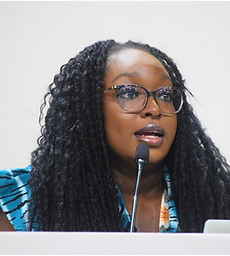
Over the past few months, I had the opportunity to organize and facilitate a series of ACE Community Dialogues as part of my role as ACE Thematic Ambassador with Youth Negotiators Academy (YNA), aimed at creating accessible and interactive spaces for young negotiators to engage with ACE under the UNFCCC.
What initially started as a relatively simple idea to create discussions around ACE gradually became a meaningful learning experience, not only for participants, but also for myself.
One thing that continuously stayed with me throughout the series was how many young people, organizations, and practitioners are already implementing ACE without necessarily recognizing it as such. Across different communities, people are already leading initiatives around climate education, advocacy, public participation, training, and awareness-raising. Yet, many still perceive ACE as something distant, abstract, or limited to negotiation spaces.
I recognized this feeling because I had also experienced it myself. Before engaging more deeply in climate negotiations, ACE often felt like a distant framework discussed within UNFCCC processes rather than something directly connected to realities on the ground. But the more I engaged with the framework, the more I realized that ACE is already present in many of the activities young people are leading every day.
This realization became one of the key motivations behind launching the dialogue series: helping demystify ACE and making it more accessible, practical, and connected to people’s realities and ongoing work.
Between March and May 2026, the ACE Community Dialogues brought together nearly 100 young people, practitioners, negotiators, and climate advocates from different regions. Across three sessions, the series explored ACE from multiple perspectives, from understanding the framework itself, to implementation realities, and finally to ongoing negotiations ahead of Bonn Subsidiary Bodies (SB64).
The series began on March 31 with a first dialogue focused on understanding the ACE framework and the Glasgow Work Programme. The session featured Berenice Danaé Espinoza from Mexico, a 2024 UN CC:Learn Champion and climate consultant working on ACE, adaptation, and capacity-building. This first discussion introduced participants to the six ACE elements and explored why climate education, access to information, and public participation remain essential for meaningful climate action.

What stood out to me during this session was how many participants began connecting ACE to initiatives they were already implementing locally. It reinforced the idea that ACE already exists in many forms on the ground sometimes without people even realizing it.

The second session, held on April 14, shifted the discussion from policy to practice. Bringing together Wafiiqah Youssouf Mbechezi from Comoros, Nathalie Gwatirisa from Zimbabwe, and Deborah Lika from Albania, the dialogue explored how ACE is implemented across different national and regional contexts.
This session was particularly rich because it grounded the conversation in practical realities. Discussions around tokenistic participation, institutional coordination, and community ownership highlighted that while ACE provides a common framework, implementation realities vary significantly depending on local contexts and capacities.
The dialogue also reinforced the importance of recognizing local knowledge, lived experiences, and grassroots leadership within climate processes.
The final dialogue, organized on May 5, focused on ACE negotiations ahead of the SB64. The session welcomed Massiel Cairo from the Dominican Republic, currently serving as G77 & China ACE Coordinator under the UNFCCC. This conversation provided participants with valuable insights into current negotiation dynamics, priorities, and challenges surrounding ACE within the UNFCCC process, particularly in the context of the upcoming midterm review of the Glasgow Work Programme.
Discussions highlighted the importance of ensuring more inclusive ACE processes, including stronger attention to persons with disabilities and elderly populations.
.png)
What I appreciated most throughout this series was seeing participants grow more confident in engaging with ACE discussions and connecting negotiation processes to their own realities and work. It also reinforced for me the importance of creating accessible and interactive learning spaces around climate policy and negotiations, especially for young people who often perceive these spaces as intimidating or disconnected from their experiences.
Beyond the discussions themselves, organizing the series was also a personal learning journey. I learned the importance of preparation, intentional facilitation, and creating environments where people feel comfortable sharing experiences and asking questions. I also realized how powerful peer learning can be when discussions move beyond formal presentations and create genuine exchange.

As we are currently gathering for SB64 and continue reflecting on the future of ACE implementation, I believe there is still a strong need for spaces that help bridge the gap between policy frameworks, negotiations, and realities on the ground. ACE cannot remain only a concept discussed within negotiation rooms; it must continue to connect with communities, youth-led initiatives, and everyday climate action.
This series reminded me that climate empowerment is already happening in many ways across different communities. Sometimes, what is most needed is simply creating the space for people to recognize it, connect it, and strengthen it together.